English Article

English Article

The War of Disinformation: Propaganda Against the Role of the Pakistan Army and the Reality

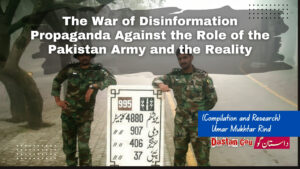
(adsbygoogle = window.adsbygoogle || []).push({}); The board installed outside the SSG Training Center is not merely a piece of stone and paint, but a physical declaration of an ideology. The distances to Jerusalem, Delhi, and Srinagar etched upon it serve a purpose far greater than a geographical lesson; they sow the seed of a mission in the mind and soul of every commando training there. This mission is not just about defending geographical borders, but about demonstrating allegiance to the principles, ideologies, and communities whose protection a soldier feels responsible for. Here, these numbers written on stone are, in fact, measures of faith, meant to convey that a soldier’s vision is not limited to border posts, but also sees and judges the oppression and injustices occurring on a global scale. However, this very sense of sacred duty and zeal for freedom is being distorted by a specific group, termed in the writing as the “Ibn Abi Munafiq Group” (Son of Abu Munafiq Group), for its own political and ideological objectives. Their accusation is a strange paradox: they spread propaganda labeling the Pakistan Army as an American agent, claiming that if it were to go to Palestine, it would actually be serving American and Zionist interests. It is noteworthy that a group which itself may potentially be operating on foreign funding and agendas is busy trying to prove the national institutions to be tools of external powers for its own defense and popularity. This is precisely the hypocrisy ( Nifaq ) pointed towards in the Holy Quran “And when it is said to them, ‘Do not cause corruption on the earth,’ they say, ‘We are but reformers.’ Unquestionably, it is they who are the corrupters, but they perceive [it] not” (Surah Al-Baqarah: 11-12). Their words are of “reform,” but their actions, their associations, and their propaganda often lead to discord, distrust, and the fragmentation of national unity. The SSG Board: The Reality Behind the Symbol To understand this board, we must look at the intellectual and ideological framework behind it. The training of Pakistan’s armed forces, especially its elite forces, is not limited to physical exercises and weapon handling. An important pillar of this training is ideological education and the nurturing of a spirit of struggle ( Jihadi spirit). The name Jerusalem is on this board because it is the symbol of Islam’s first Qibla , whose Zionist occupation is a perpetual wound for the Muslim world. This name keeps alive in the commando’s heart the connection with the Muslim Ummah and the yearning for the liberation of occupied Palestine. The name Delhi is a reminder of the unending painful saga of Kashmir, India’s illegal control over it, and the atrocities inflicted on its people. Srinagar is the heart of Kashmir, whose freedom is central to the ideology of the Pakistani nation. This board is, in reality, an “ideological compass.” During the toughest hours of training, when the body is exhausted, it serves to remind the soldier that he is not merely a soldier, but a Mujahid (one who strives) with a purpose. His struggle is not just for a salary or a job, but for a higher ideal: the protection of Islam, support for oppressed Muslims, and defense of the homeland. It is this very spirit that makes the Pakistani soldier one of the best in the world. The Web of Propaganda: The Slogan of “American Agent” The “Ibn Abi Munafiq Group” or similar elements, active on various platforms, try to cast doubt on this very spirit and ideological commitment. Their primary weapon is labeling them as an “American agent” or a “slave army.” This is an old but often effective propaganda tactic. The objectives behind it may be: 1. Weakening National Unity The Pakistan  Army is the most organized and the most trusted national institution in the country. By damaging trust in it, discord and distrust can be spread throughout society. 2. Diverting Public Attention When the  nation is entangled in doubts about its own protective institutions instead of an external enemy or an internal crisis, the real issues and the actual elements behind them remain hidden behind the curtain. 3. Serving an External Agenda These groups may themselves be working for the interests of external powers. Pakistan is a nuclear power with immense geographical importance. Destabilizing it and embroiling it in internal strife is in the interest of several powers in the region. Attacking national defense centers while presenting themselves as “reformers” is actually fulfilling the agenda of these very powers. 4. Distorting the Ideology of Pakistan  Pakistan came into being in the name of Islam. The ideological training board of the Pakistan Army reflects this very ideology. Proving it to be an “American agent” is essentially an attack on the very foundational purpose of Pakistan’s creation. The Palestine Issue: Exploitation of Emotions The issue of Palestine is at the heart of the emotions of the entire Muslim Ummah. The heart of every member of the Pakistan Army also beats for the Palestinians. However, military intervention as a state is a complex geopolitical decision that requires weighing millions of factors. The Pakistan Army is subordinate to the government’s policy. Propagandists ignore this complex reality and, using mere emotional slogans, try to convince the public that “the army is not going because it is America’s agent.” This is an extremely superficial and misleading analysis. The reality is that the Pakistan Army has never in history sided with America or any other power in a war against Muslim countries. On the contrary, it has tried to protect Muslims by participating in UN peacekeeping forces against Serbia in Bosnia. On the issue of Palestine, Pakistan has always fully supported the Palestinian stance diplomatically, morally, and ethically. Palestine holds a central place in the preparation and ideology-building of the armed forces, as evident from the SSG board. But advising a country’s army to land in another region without thinking is not military wisdom but emotional folly. The Quranic Context: The Guise

English Article

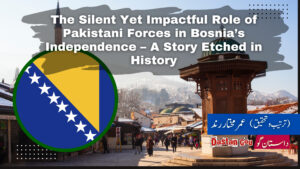
The Silent Yet Impactful Role of Pakistani Forces in Bosnia’s Independence – A Story Etched in History

The Silent Yet Impactful Role of Pakistani Forces in Bosnia’s Independence – A Story Etched in History > “If Pakistan had not existed, perhaps we would have been wiped out as a nation.” — These words were spoken by a former President of Bosnia in acknowledgment of the sacrifices made by the Pakistani military. While a dark chapter of genocide against Bosnian Muslims was being written in the heart of Europe, with much of the world averting its gaze, there was one country that, despite its limited resources, did everything Bosnia needed most: practical help, moral support, and a ray of hope in a time of despair. That country was Pakistan. 1. The Beginning – A Tragic Backdrop In 1992, as Yugoslavia disintegrated and Bosnia declared independence, a horrific war began. Bosnian Muslims (Bosniaks) became trapped in the onslaught of Serb militias. The siege of Sarajevo became the longest civilian siege in modern history, where citizens were systematically targeted. Rape was used as a weapon of war, and in Srebrenica, over 8,000 Muslim men were massacred in a single day. Alija Izetbegović, the Bosnian President at the time, said this was when the entire world had turned its back on them. 2. Pakistan’s Response – Action Over Words In this hour of need, Pakistan played a role that forever secured its place in the hearts of the Bosnian people. This role was multi-layered and comprehensive: * Immediate and Unequivocal Political Support Pakistan promptly recognized Bosnia’s independence and established diplomatic relations. On international forums, Pakistan raised its voice in Bosnia’s favor and called the UN arms embargo on Bosnia “illegal.” * Active Participation in the UN Peace Mission (UNPROFOR) Pakistan contributed a large contingent of 3,000 troops to Bosnia. This was not just a number. While soldiers from other nations often hesitated in the face of danger, Pakistani troops patrolled the most dangerous areas, liberated women from rape camps, and stood their ground even against Serb tanks. A Serb report noted, “Only the Pakistanis would fight back. The others would hide.” * The Well-Known Narrative of Covert Military Aid *  Numerous historical accounts and reports indicate that Pakistan’s military intelligence (ISI), despite UN sanctions, played a crucial role in providing modern anti-tank missiles and other weapons to the Bosnian Army (ARBiH). This aid is said to have been pivotal in turning the tide of the war. Lt. Gen. Javed Nasir, then head of ISI, later acknowledged this support. * A Package of Humanitarian Compassion Pakistan provided shelter to thousands of Bosnian refugees, becoming the third-largest Muslim host country after Turkey and Jordan. The supply of medicine, food, and relief aid continued at both governmental and public levels. 3. Unforgettable Sacrifices and Veteran Leadership This path was paved with Pakistani blood. Six Pakistani peacekeepers were martyred during the Bosnia mission. One major sacrificed his life while saving an innocent child. Their graves in Bosnia are still tended to, with locals respectfully placing flowers on them. Later, officers like Pakistan’s former ambassador to Bosnia, Major General (Retd.) Khalid Amir Jaffri, through their speeches and writings, provided crucial international testimony of the atrocities in Bosnia, so such events would never be repeated. 4. Post-War – Laying Foundations for Lasting Brotherhood Pakistan’s support did not end with the war; it transformed: * Defense and Economic Cooperation The two countries signed a mutual defense agreement and began work on a free trade agreement. Pakistan supplied defense equipment to Bosnia. * An Exchange of Mutual Respect *  When the 2005 earthquake struck Pakistani-administered Kashmir, Bosnian schoolchildren collected donations to help build a school and health center there. The Bosnian ambassador clarified this was in acknowledgment of Pakistan’s earlier kindness. * Cultural Bonds Today in Bosnia, Pakistan is a respected name. The Pakistani peacekeepers are remembered, and ordinary Bosnians know Pakistanis as their brothers. 5. Silent but Indelible Impact Pakistan’s role in the Bosnian War was not that of a traditional victor. It was the role of a friend who stood silently, steadfastly, and selflessly with an oppressed nation. It took practical steps despite global political pressure, sacrificed its soldiers, and laid the foundation for long-term brotherhood. This is why, decades later, the people of Bosnia still hold Pakistan in high esteem. They tell their children how Pakistan helped them in their darkest hour. This is not merely a story of diplomatic relations between two countries, but a tale of human compassion, religious solidarity, and selfless sacrifice that will forever live on in the pages of history. Bosnia’s journey highlighted a key aspect of Pakistan’s foreign policy: “Pakistan will always strive for the material and moral support of oppressed and subjugated people around the world.” Its role in Bosnia’s independence is a living and powerful testament to that promise. 🔗 Related Article Complete Urdu version of this article is also available. 📖 اردو ورژن پڑھیں

English Article

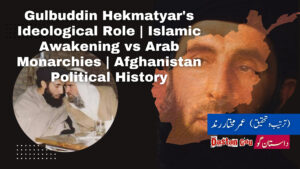
Gulbuddin Hekmatyar’s Ideological Role | Islamic Awakening vs Arab Monarchies | Afghanistan Political History

Gulbuddin Hekmatyar’s Ideological Role in Afghanistan’s Political History: A Critical Review of Islamic Awakening and Opposition to Arab Monarchies Introduction This research paper presents an in-depth analysis of the ideological foundations of Gulbuddin Hekmatyar’s political thought, particularly focusing on the influences of Maulana Syed Abul A’la Maududi and Hassan al-Banna. The paper aims to demonstrate that Hekmatyar’s political struggle was not merely Afghan nationalism or regional power aspiration, but possessed a distinct ideological identity that aligned with global Islamic movements. Simultaneously, the paper explains why monarchical Arab states like Saudi Arabia feared figures like Hekmatyar and what measures they took against them. Part 1: The Formation of Hekmatyar’s Ideological Journey 1. Early Education and Intellectual Influences Gulbuddin Hekmatyar studied engineering at Kabul University, but religious and ideological teachings played a key role in shaping his political thought. By the 1970s when he joined the Islamic Society of Afghanistan, two major intellectual movements were at their peak in the Muslim world: – Muslim Brotherhood: Influenced by Hassan al-Banna (1906-1949), this movement starting from Egypt had spread throughout the Arab world. Its central slogan was “Islam is the solution” and it advocated for establishing a comprehensive Islamic system of governance. – Jamaat-e-Islami Pakistan: Under the leadership of Maulana Maududi (1903-1979), this movement struggled to establish an Islamic state in the subcontinent. Maududi’s works “Khilafat-o-Malookiyat” (Caliphate and Kingship), “Islamic State,” and “Tafhim-ul-Quran” had profound impact across the Muslim world. 2. Synthesis of Maududi and al-Banna’s Ideologies Hekmatyar’s political thought was deeply influenced by both Maududi and al-Banna: a) Concept of Islamic State Maududi clarified in his book “Islamic State” that Islamic government is not pure theocracy but “Islamic democracy” where sovereignty belongs only to Allah, but governance is chosen through public consultation. Similarly, Hassan al-Banna emphasized “consultative system” in the Muslim Brotherhood’s manifesto. Hekmatyar’s speeches and writings repeatedly used terms like “Islamic democracy” and “consultative system.” b) Anti-Imperialism Both Maududi and al-Banna strongly opposed colonial powers. While Maududi waged intellectual jihad against British colonialism through his writings, al-Banna led practical struggle against British influence in Egypt. Hekmatyar viewed jihad against Soviet colonialism as an extension of this tradition. c) Comprehensive Islamic Revolution The Muslim Brotherhood’s slogan was: “Allah is our objective, the Prophet is our leader, the Quran is our constitution, jihad is our way, and martyrdom is our greatest desire.” Jamaat-e-Islami also advocated establishing an “Islamic revolution.” Hekmatyar aimed not merely to liberate Afghanistan from Soviet forces but to make it a cradle of “Islamic revolution.” d) Global Islamic Brotherhood (Ummah Wahidah) Hekmatyar made no distinction between Arab and non-Arab mujahideen. His organization “Hezb-e-Islami” included Arabs, Afghans, Pakistanis, and other Muslims working together—an approach aligned with Maududi’s concept of “Ummah Wahidah” and al-Banna’s vision of “global Muslim Brotherhood.” Part 2: Arab Monarchies’ Fear: Ideological and Practical Foundations 1. Ideological Vulnerability of Monarchial Systems Saudi Arabia and Gulf states based on monarchial systems viewed figures like Hekmatyar as serious threats to their existence for several reasons: a) Maududi’s Critical Review in “Khilafat-o-Malookiyat” Maududi analyzed in his famous book the critical turning point in Islamic history where the Rashidun Caliphate system transformed into monarchy. He declared monarchy incompatible with Islamic governance: “The system established after the Rightly Guided Caliphs was not actually the Islamic system established by Prophet Muhammad (PBUH).” Saudi Arabia’s political foundation was based on this very “monarchy” that Maududi criticized. Hekmatyar’s intellectual association with Maududi created concerns among Saudi rulers that if his style of Islamic government established in Afghanistan, it would raise questions in Saudi citizens’ minds. b) Al-Banna’s Attack on Monarchial System Hassan al-Banna also took clear stance against Egypt’s monarchy: “We do not believe in any system of governance established without people’s consent.” This very position initially led Saudi Arabia to establish relations with the Muslim Brotherhood, but when they perceived Brotherhood’s ideology as threatening their monarchial system, their attitude changed. c) Fear of Democratic Islamic Model Hekmatyar proposed a model of Islamic government based on elections and consultation—fundamentally different from the hereditary rule of Saudi Arabia’s “Al Saud” family. Saudi leadership feared that if such government succeeded in Afghanistan, it would become a dangerous precedent against monarchial systems throughout the Arab world. Part 3: The 1992 Crisis: Outcome of Ideological Warfare When the Soviet-backed Najibullah government collapsed, Afghanistan faced political transition. By then, Hekmatyar’s Hezb-e-Islami was the most organized and powerful group. However, both Saudi Arabia and America made every effort to prevent Hekmatyar from coming to power. Historical documents and reliable sources (like Steve Coll’s “Ghost Wars”) indicate that Saudi intelligence and CIA played key roles in making Sibghatullah Mojaddidi interim president. Mojaddidi was a Sufi elder without clear ideological identity—neither supporter of Maududi/al-Banna’s thought nor possessing clear political vision. His selection essentially filled an “ideological vacuum” where negotiations could accommodate Saudi and American interests. Part 4: Taliban’s Rise as Alternative to Hekmatyar’s Ideological Model When Taliban emerged in 1994, their ideological structure differed significantly: – Deobandi jurisprudential tradition rather than political movements like Jamaat-e-Islami or Muslim Brotherhood – Non-political religious identity with agenda limited to “peace and implementation of sharia laws” – Simple traditional Islamic concept far from modern political institutions like parliament, elections, and democratic processes The Taliban model was “safer” for Saudi Arabia because: – It didn’t conflict with monarchy (Amir al-Mu’minin system was essentially a type of monarchy) – No democratic processes threatened Saudi monarchial system – Taliban’s isolation made them more dependent on Saudi Arabia Part 5: Conclusion and Lessons Afghanistan’s modern history witnessed Gulbuddin Hekmatyar not merely as military commander or politician but as figure with distinct ideological identity. His political thought was deeply influenced by Maududi and al-Banna’s teachings emphasizing Islamic democracy, consultative system, and popular sovereignty. Saudi Arabia and other Arab monarchies’ fear of Hekmatyar wasn’t merely military or political threat but deep ideological concern. They feared that if Maududi-al-Banna based Islamic democratic system succeeded in Afghanistan, it would become powerful precedent against monarchial systems throughout Arab world. Afghanistan’s history teaches that when foreign powers intervene in

English Article

Something about us that we do? What do you want!

    Urdu Mentor Library is more than just a repository of information; it’s a vibrant community where learners and thinkers come together to explore the rich tapestry of Urdu literature, history, and culture. Our platform serves as a bridge between tradition and modernity, offering a plethora of resources to cater to diverse interests and learning styles. At Urdu Mentor Library, we believe that knowledge is not static but a dynamic journey of discovery. Whether you are a student delving into classical Urdu poetry or a researcher uncovering hidden gems in Urdu philosophy, our curated collection is designed to inspire and inform. We strive to showcase the depth and breadth of Urdu’s contribution to the world of ideas, from ancient manuscripts to contemporary debates. One of the hallmarks of the Urdu Mentor Library is its commitment to inclusivity and accessibility. We understand the importance of making knowledge available to all, regardless of background or location. That’s why our platform is user-friendly and optimized for seamless navigation, ensuring that anyone with a curiosity for Urdu can embark on a rewarding learning experience. Join us on this exciting journey of exploration and enlightenment. Whether you’re a lifelong enthusiast or just beginning your Urdu odyssey, Urdu Mentor Library welcomes you to a world of endless possibilities. Let’s embark on this quest for knowledge together, as we unravel the intricacies of Urdu’s rich heritage and forge new paths of understanding and  appreciation Our Mission Our mission at Urdu Mentor Library extends far beyond being a mere repository of knowledge. We aspire to be a catalyst for intellectual growth and social change by fostering a community of curious minds and encouraging meaningful conversations. One of our primary goals is to empower individuals through education and information. By offering a comprehensive platform, we aim to equip our readers with the tools they need to navigate complex topics with clarity and understanding. Whether it’s delving into the nuances of political ideologies or dissecting social issues, we believe that informed discussions are key to driving positive change in society. Furthermore, we are committed to inspiring conversations that transcend boundaries and bridge divides. We recognize the importance of diversity in perspectives and actively promote inclusivity within our community. By facilitating dialogue between individuals from different backgrounds and experiences, we strive to create a space where mutual respect and learning thrive. Our dedication to our mission is reflected in the diverse range of content we offer. From thought-provoking articles and essays to interactive discussions and interviews, Urdu Mentor Library is a hub for intellectual stimulation and exploration. We encourage our readers to engage critically with the material and to contribute their own insights and perspectives, creating a dynamic exchange of ideas. In essence, our mission is to cultivate a culture of lifelong learning and open-mindedness. We believe that by empowering minds and inspiring conversations, we can collectively work towards a more informed, empathetic, and enlightened society. Join us in this journey of discovery and transformation at Urdu Mentor Library. Exploring Political Landscapes and Social Dynamics At Urdu Mentor Library, we delve deep into the intricate tapestry of political landscapes and social dynamics, offering our readers a platform to explore and understand the ever-evolving world around us. Our website features a wealth of in-depth analyses that provide nuanced perspectives on both national and international political developments. We aim to shed light on the complex issues that shape our societies through thought-provoking articles and insightful commentary. From examining the impact of global events on local communities to exploring the intersection of politics and culture, our content encourages thoughtful dialogue and informed opinions. We believe that by fostering a deeper understanding of political dynamics, we can empower individuals to engage meaningfully in civic discourse and contribute positively to their communities. Whether you’re interested in geopolitical trends, social justice movements, or governance dynamics, Urdu Mentor Library offers diverse content to satisfy your curiosity. Join us as we navigate the complexities of the political landscape together, seeking to uncover truths, challenge assumptions, and promote constructive dialogue for a more informed and engaged society. Celebrating Literature and Authors Embark on a journey of literary delight with Urdu Mentor Library as we celebrate the enchanting world of literature and the talented authors who bring stories to life. Our curated collection invites readers of all levels, from seasoned bookworms to newcomers, to explore a treasure trove of captivating reads and literary discoveries. Delve into the depths of timeless classics that have shaped literary landscapes, discover the beauty of contemporary novels that reflect modern experiences, and uncover hidden gems recommended by our passionate team of literary enthusiasts. Our platform serves as a guide, offering insightful book introductions and illuminating author spotlights that highlight the diverse voices and narratives within the literary realm. Beyond simply showcasing books, we aim to foster a deeper appreciation for literature by creating a space where readers can engage with stories on a profound level. Through discussions, recommendations, and analyses, we encourage exploration and dialogue that enriches the reading experience. Join us in celebrating the magic of literature and the boundless creativity of authors as we embark on a journey of imagination, empathy, and discovery through the pages of Urdu Mentor  Library. Access to a Wealth of Resources: PDF  Books and Articles At Urdu Mentor Library, we pride ourselves on providing access to a wealth of resources, including an extensive collection of PDF books and articles that cater to a wide range of interests and subjects. Whether you’re a student, researcher, or simply someone with a thirst for knowledge, our platform offers a treasure trove of educational, historical, and literary materials at your fingertips. Our PDF library encompasses a diverse array of subjects, from academic textbooks and scholarly articles to historical accounts and literary masterpieces. Dive into the rich tapestry of Urdu literature with classic works by renowned authors, explore the depths of historical events through detailed accounts and analyses, or delve into specialized topics in various academic disciplines. The convenience of PDF format

English Article

Something about us that we do? What do you want!

    Urdu Mentor Library is more than just a repository of information; it’s a vibrant community where learners and thinkers come together to explore the rich tapestry of Urdu literature, history, and culture. Our platform serves as a bridge between tradition and modernity, offering a plethora of resources to cater to diverse interests and learning styles. At Urdu Mentor Library, we believe that knowledge is not static but a dynamic journey of discovery. Whether you are a student delving into classical Urdu poetry or a researcher uncovering hidden gems in Urdu philosophy, our curated collection is designed to inspire and inform. We strive to showcase the depth and breadth of Urdu’s contribution to the world of ideas, from ancient manuscripts to contemporary debates. One of the hallmarks of the Urdu Mentor Library is its commitment to inclusivity and accessibility. We understand the importance of making knowledge available to all, regardless of background or location. That’s why our platform is user-friendly and optimized for seamless navigation, ensuring that anyone with a curiosity for Urdu can embark on a rewarding learning experience. Join us on this exciting journey of exploration and enlightenment. Whether you’re a lifelong enthusiast or just beginning your Urdu odyssey, Urdu Mentor Library welcomes you to a world of endless possibilities. Let’s embark on this quest for knowledge together, as we unravel the intricacies of Urdu’s rich heritage and forge new paths of understanding and  appreciation Our Mission Our mission at Urdu Mentor Library extends far beyond being a mere repository of knowledge. We aspire to be a catalyst for intellectual growth and social change by fostering a community of curious minds and encouraging meaningful conversations. One of our primary goals is to empower individuals through education and information. By offering a comprehensive platform, we aim to equip our readers with the tools they need to navigate complex topics with clarity and understanding. Whether it’s delving into the nuances of political ideologies or dissecting social issues, we believe that informed discussions are key to driving positive change in society. Furthermore, we are committed to inspiring conversations that transcend boundaries and bridge divides. We recognize the importance of diversity in perspectives and actively promote inclusivity within our community. By facilitating dialogue between individuals from different backgrounds and experiences, we strive to create a space where mutual respect and learning thrive. Our dedication to our mission is reflected in the diverse range of content we offer. From thought-provoking articles and essays to interactive discussions and interviews, Urdu Mentor Library is a hub for intellectual stimulation and exploration. We encourage our readers to engage critically with the material and to contribute their own insights and perspectives, creating a dynamic exchange of ideas. In essence, our mission is to cultivate a culture of lifelong learning and open-mindedness. We believe that by empowering minds and inspiring conversations, we can collectively work towards a more informed, empathetic, and enlightened society. Join us in this journey of discovery and transformation at Urdu Mentor Library. Exploring Political Landscapes and Social Dynamics At Urdu Mentor Library, we delve deep into the intricate tapestry of political landscapes and social dynamics, offering our readers a platform to explore and understand the ever-evolving world around us. Our website features a wealth of in-depth analyses that provide nuanced perspectives on both national and international political developments. We aim to shed light on the complex issues that shape our societies through thought-provoking articles and insightful commentary. From examining the impact of global events on local communities to exploring the intersection of politics and culture, our content encourages thoughtful dialogue and informed opinions. We believe that by fostering a deeper understanding of political dynamics, we can empower individuals to engage meaningfully in civic discourse and contribute positively to their communities. Whether you’re interested in geopolitical trends, social justice movements, or governance dynamics, Urdu Mentor Library offers diverse content to satisfy your curiosity. Join us as we navigate the complexities of the political landscape together, seeking to uncover truths, challenge assumptions, and promote constructive dialogue for a more informed and engaged society. Celebrating Literature and Authors Embark on a journey of literary delight with Urdu Mentor Library as we celebrate the enchanting world of literature and the talented authors who bring stories to life. Our curated collection invites readers of all levels, from seasoned bookworms to newcomers, to explore a treasure trove of captivating reads and literary discoveries. Delve into the depths of timeless classics that have shaped literary landscapes, discover the beauty of contemporary novels that reflect modern experiences, and uncover hidden gems recommended by our passionate team of literary enthusiasts. Our platform serves as a guide, offering insightful book introductions and illuminating author spotlights that highlight the diverse voices and narratives within the literary realm. Beyond simply showcasing books, we aim to foster a deeper appreciation for literature by creating a space where readers can engage with stories on a profound level. Through discussions, recommendations, and analyses, we encourage exploration and dialogue that enriches the reading experience. Join us in celebrating the magic of literature and the boundless creativity of authors as we embark on a journey of imagination, empathy, and discovery through the pages of Urdu Mentor  Library. Access to a Wealth of Resources: PDF  Books and Articles At Urdu Mentor Library, we pride ourselves on providing access to a wealth of resources, including an extensive collection of PDF books and articles that cater to a wide range of interests and subjects. Whether you’re a student, researcher, or simply someone with a thirst for knowledge, our platform offers a treasure trove of educational, historical, and literary materials at your fingertips. Our PDF library encompasses a diverse array of subjects, from academic textbooks and scholarly articles to historical accounts and literary masterpieces. Dive into the rich tapestry of Urdu literature with classic works by renowned authors, explore the depths of historical events through detailed accounts and analyses, or delve into specialized topics in various academic disciplines. The convenience of PDF format

English Article

Comment : Understanding Turkeys Strategy

  _Muhammad Bilal Iftikhar Khan_ Turkey’s strategic maneuvers may seem complex, but they’re part of a long-term plan to reclaim its historical significance in the global hierarchy. The country is modernizing its military, expanding its naval, air, and land forces, and asserting its influence following the expiration of the Treaty of Lausanne in 2023. On land, Turkey faces challenges from Kurdish separatists, who receive support from Israel and the US. This dynamic stems from the 1990s Adana Agreement between Syria and Turkey, after which Israel began backing Kurdish militancy. The US has also utilized Kurdish forces in Iraq and Syria. Turkey has launched operations against Kurdish separatists in Iraq and Syria. In the Eastern Mediterranean, Turkey disputes the proposed gas pipeline, with the US and Europe supporting Israel, Cyprus, and Greece. Turkey claims drilling rights in areas considered part of Turkish Cyprus’s Exclusive Economic Zone (EEZ), potentially escalating into regional conflict. Turkey also has longstanding disputes with Greece in the Aegean Sea. Strategically positioned, Turkey controls the Bosphorus and Dardanelles, the only passage from the Black Sea to the Mediterranean. This affects five countries, including Russia, Ukraine, Georgia, and Romania, which relied on free passage under the Treaty of Lausanne. Beyond its immediate region, Turkey has been quietly expanding its influence. It has fostered strong alliances with Pakistan, Azerbaijan, and other regional players, creating a network of cooperation that enhances its geopolitical clout. Through strategic partnerships and military deployments, Turkey has ensured a silent yet significant presence in the Persian Gulf, Red Sea, and Caspian Sea, projecting power into vital trade corridors. Critics accuse Turkey of hypocrisy for allowing Azerbaijani oil to reach Israel. However, this overlooks the complexities on the ground. Turkey’s priorities are clear: it refused US/NATO use of its territory in 2003, purchased Russia’s S-400 system (costing its F-35 program), acts against Russia in Syria, and supports Hamas and anti-Israel resistance. For now, Turkey seeks to build strength, not engage in conflict, focusing on its “Mavi Vatan” (Blue Homeland) vision. As tensions simmer, Turkey will likely continue to navigate this delicate balance of power. The stage is set for potential crises between Turkey, Israel, the US, and NATO over Eastern Mediterranean resources and maritime borders. However, Turkey’s calculated approach aims to secure its interests and reclaim its influence, paving the way for a resurgence as a major regional power.

English Article

The Battle of the Self Towards the Straight Path

  Author⭐ Muhammad Bilal Iftikhar Khan ⭐ To live like the noblest of creation, it is essential to have a purpose in life. This purpose gives direction and determination. The stages of capacity bring about progress on the journey and maintain accuracy along the way. That is, the journey that began for the sake of Allah leads to the Sirat al-Mustaqim through the development of capacity. Now, it is up to the son of Adam to decide whether he will travel the path of material life as the lowest of the low or as the best of creation. Yes, regardless of how one travels, remember that the biggest obstacle on the journey through time and space is the self. It takes the lowest to even greater depths and tries to dig holes and bring down the best of creation. The journey with a purpose has more friction, as the person does not know when the self will intoxicate them with the intoxication of ego and they will become addicted to the very traps they were trying to avoid. One more thing, you have to make the decision, but the courage and intention for success and action is a gift from Allah. The guidance of a spiritual guide is also necessary because it increases motivation and desire. If the connection is broken, the cup becomes empty and the voice becomes louder. O Allah, you are the Generous, the Merciful, the Lord of the Lords, and the Possessor of Majesty and Honor. Grant us success and steadfastness. If Your mercy is not bestowed, Your servants will be humiliated and disgraced. O Lord of the Worlds, O Generous One, show us Your mercy, for You are our Lord and Creator and we are Your servants. Guide us to the Sirat al-Mustaqim and make the path easy. Amen, and amen again. How is it possible to treat one’s mistakes without understanding one’s nature? The reality of one’s limitations can only be understood when one understands oneself. The nafs (ego) is like a crooked bone. In trying to straighten it, one will either give up or break it, and neither situation is commendable. Therefore, the treatment is to understand one’s nature. The treatment of the nafs (ego) only takes place in the furnace of love. And love comes from falling in love. Love, like a vessel, also has stages: liking, developing intimacy, falling in love, and then true love. The ultimate stage is annihilation and after annihilation, eternal existence. Love begins with companionship, which creates a connection. And when the connection matures, it becomes love. Therefore, remember the saying of the Holy Prophet (peace be upon him). He said that the example of a bad companion and a good companion is like that of a perfumer and a blacksmith. A good companion is like a perfumer, who will either give you perfume as a gift or you will buy perfume from him. Or at the very least, you will enjoy his pure fragrance. A bad companion is like a blacksmith who blows in the furnace, who will either burn your body and clothes or you will smell his bad odor. So friends, if you want to reform your nafs (ego), seek the company of good people. The paths will become easier and you will receive abundant blessings. Insha’Allah.۔۔ 🔶⭐🔶⭐🔶⭐🔶 Self-improvement :: This is the overarching theme of the article, focusing on overcoming the challenges of the ego (nafs) and achieving spiritual growth. Purpose :: The article emphasizes the importance of finding a life purpose that guides your journey. Sirat al-Mustaqim :: This refers to the “straight path” in Islamic eschatology, which leads to paradise. Ego (nafs) This is a central concept in Islamic thought, referring to the human self’s desires and inclinations. Spiritual development.: The article discusses stages of spiritual growth and overcoming the obstacles presented by the ego. Guidance : The importance of seeking guidance from Allah and a spiritual guide is highlighted. Love :: The article emphasizes the role of love in the process of self-transformation. Companionship:: The importance of surrounding oneself with positive influences is discussed. خودی کی اصلاح (Khudi ki Islah) This translates directly to “self-improvement” and captures the essence of overcoming the nafs. مقصد زندگی (Maqsad Zindagi) This refers to the “purpose of life” discussed in the article. صراط مستقیم (Sirat al-Mustaqim) This translates directly to the “straight path.” نفس (Nafs) This word refers to the ego in Islamic thought. روحانی ترقی (Ruhani Taraqi) This translates to “spiritual development.” راہنمائی (Rahnumai) This refers to “guidance” from Allah and a spiritual guide. محبت (Muhabbat) This translates to “love” and its role in self-transformation. رفیق (Rafiq) This refers to “companionship” and its positive influence on self-improvement. 🔴🌟🔴🌟🔴🌟🔴

English Article

Dastan You داستان گو

 to explore our website for a unique blend of thought-provoking analysis, literary discoveries, and engaging content that both entertains and enlightens. Whether you’re looking for a fresh perspective on the latest news events, seeking inspiration from timeless poetry and sayings, or simply curious about the world of viral trends and social media sensations, Dastan Gou has something for everyone. Dive into a rich tapestry of knowledge and entertainment as we invite you to experience the beauty of words and ideas on our platform. Embrace the journey of discovery and imagination with Dastan Gou – where every click opens up a new chapter of wonder and delight.

English Article

The Prison of Past Concepts: Embracing Individuality in a Rapidly Changing World

By Muhammad Bilal Iftikhar Khan The world is in a constant state of flux, evolving at an ever-increasing pace. Technology disrupts industries, social norms shift, and the very fabric of life transforms with each passing year. Despite this dynamic landscape, we often find ourselves shackled by the “past concepts” of previous generations, leading to a disconnect between individual aspirations and societal expectations. For decades, the path to success was rigidly defined by a select few professions: doctor, engineer, or government employee. Parents, with well-meaning intentions, pressured their children to conform to this narrow spectrum, stifling individual passions and talents. The rise of the MBA offered a seemingly innovative escape, but it quickly became another gilded cage, leading to oversaturation and fierce competition. This pattern, repeated across various fields, highlights the dangers of a one-size-fits-all approach in a rapidly evolving world. The key to navigating this dynamic world lies in embracing individuality. Each child is a unique individual with their own set of interests, skills, and aspirations. By forcing them down a path dictated by past concepts, we not only risk crushing their spirit but also fostering a generation of unfulfilled individuals, destined for mediocrity.  As a parent, I have made a conscious decision to break free from the shackles of past concepts. I acknowledge that the traditional path to success is no longer guaranteed, and only the truly passionate can thrive in today’s competitive environment. My children are free to pursue their own passions, be it writing or something entirely different. They understand that success requires not just talent but also dedication and hard work.  My experience with postgraduate studies further reinforces this point. Witnessing students chase prestigious research topics, fueled by ego rather than genuine interest, highlights the pitfalls of neglecting individual passions. Choosing a research topic based solely on perceived prestige leads to frustration, wasted effort, and ultimately, an unfulfilling experience. My own journey serves as a testament to the power of self-discovery. By aligning my research with my personal interests in the Middle East, I found purpose, enjoyment, and a sense of fulfillment that transcends mere academic success. In conclusion, the world is changing at an unprecedented pace, and clinging to outdated concepts hinders our ability to adapt and thrive. We must break free from the prison of past expectations and embrace the individuality of each person. By encouraging self-discovery, fostering passion, and pursuing knowledge with genuine interest, we can empower individuals to forge their own unique paths to success and fulfillment. Remember, as the Arabic saying goes, “One who finds himself, finds God.” Let us find ourselves by embracing our unique strengths and passions, and reject the limitations imposed by past concepts.

Scroll to Top